
Bed-to-Bench
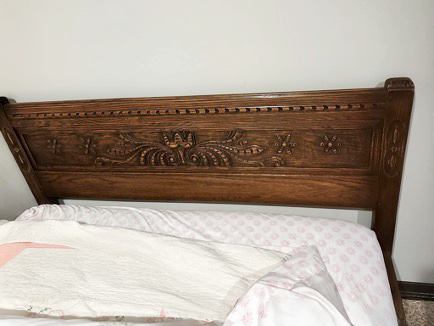
An antique Renaissance/Jacobean-style bed was transformed into a one-of-a-kind bench while preserving the character and craftsmanship of the original piece. The carved headboard became the backrest, and the footboard was repurposed to create the two ends. A new seat and decorative apron were custom-built to complete the bench.
Project Design and Layout
The design began by determining how the original bed could be reconstructed as a functional bench without losing the details that made it distinctive. The headboard provided a natural backrest, while the footboard offered matching carved panels, spindles, turned posts, and legs for the two ends.
A new seat and front apron were designed to fit between the original components and visually tie the finished piece together.
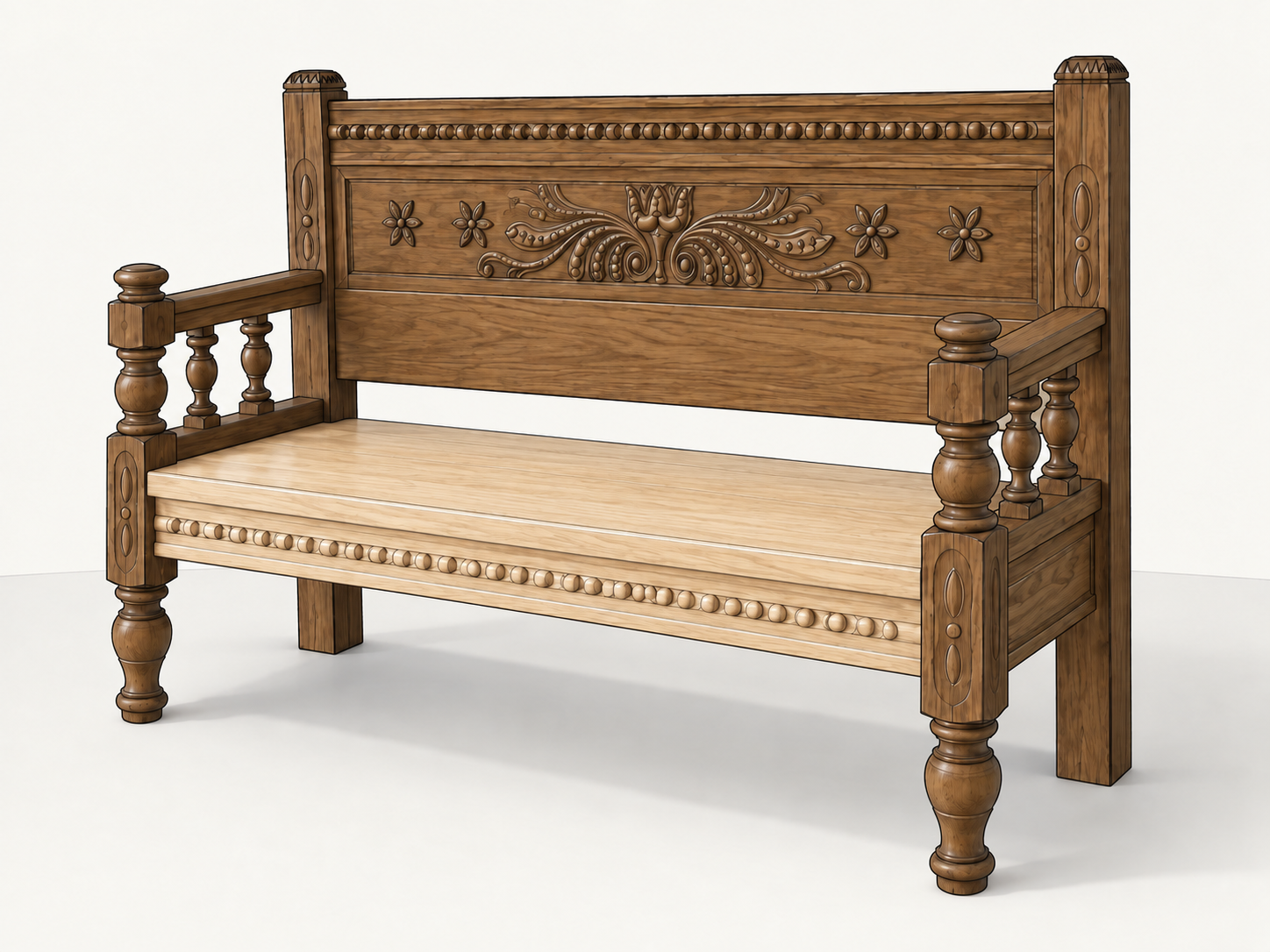
SketchUp-style visualization showing the original bed components in dark wood and the newly constructed oak seat and apron.
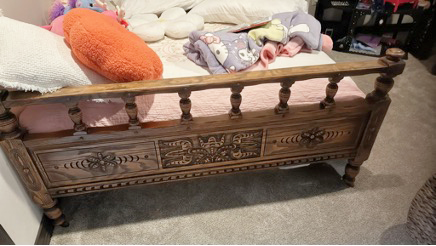
The footboard was carefully cut in half to create the matching sides of the bench. This preserved its original panels, turned posts, spindles, and carved details while allowing both ends to remain visually balanced.
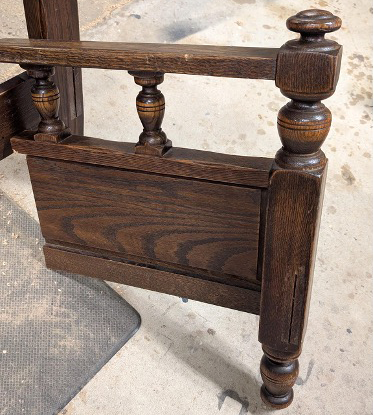
The original footboard was divided to create the two matching ends of the bench.
Milling the Materials
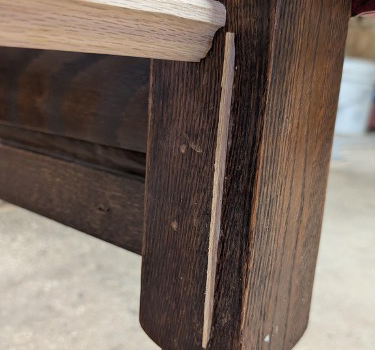
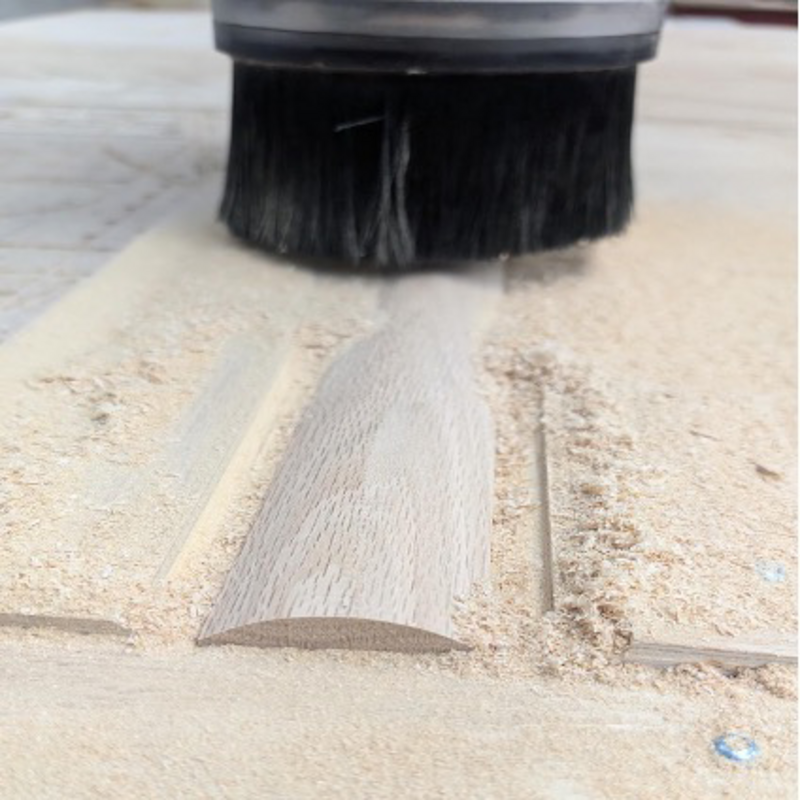
Openings left by the original bed hardware were filled with fitted pieces of oak. The custom seat was constructed using the bed’s side rails along with additional oak, and the edges of the seat boards were routed to create a beaded appearance when joined together.
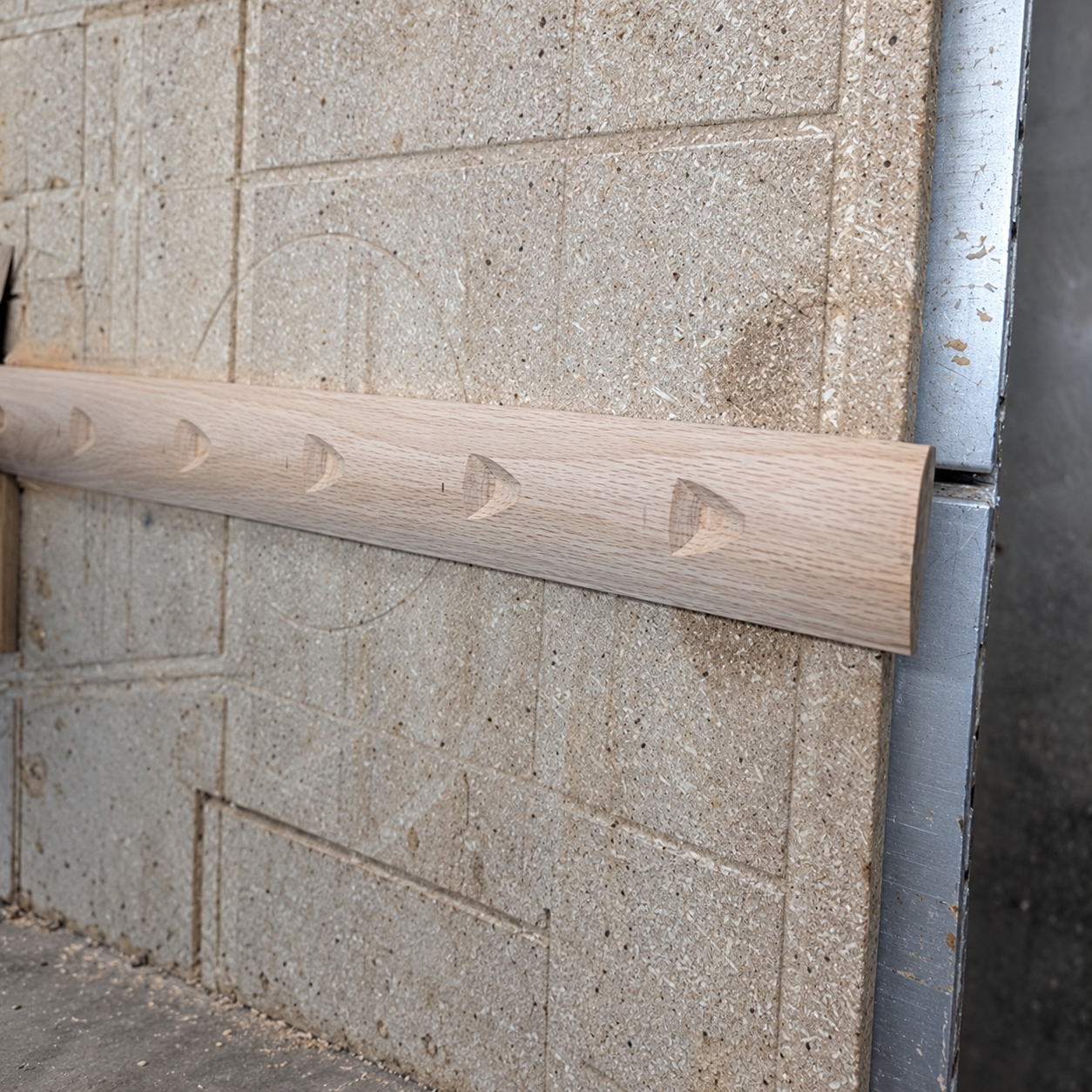
A new wooden apron was also designed and made specifically for the bench. Its repeating routed detail was inspired by the decorative carving and trim found on the original bed, helping the new construction blend naturally with the antique components.
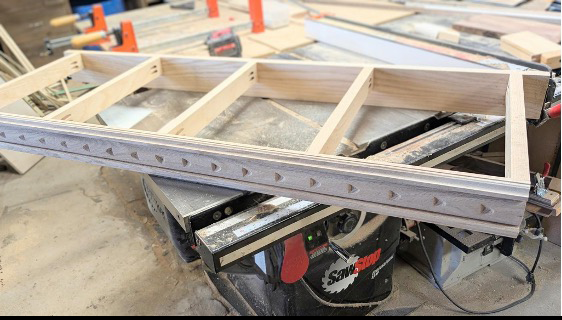
The new bench apron was designed and built to complement the detailing of the original bed.
Assembly Before Finishing
Once the original bed pieces and newly fabricated components were prepared, the bench was assembled in the shop. The darker antique wood clearly identifies the headboard and footboard pieces, while the lighter seat shows the new construction before staining.
Several stain colors were blended to help the new wood coordinate with the color and aged character of the original bed.
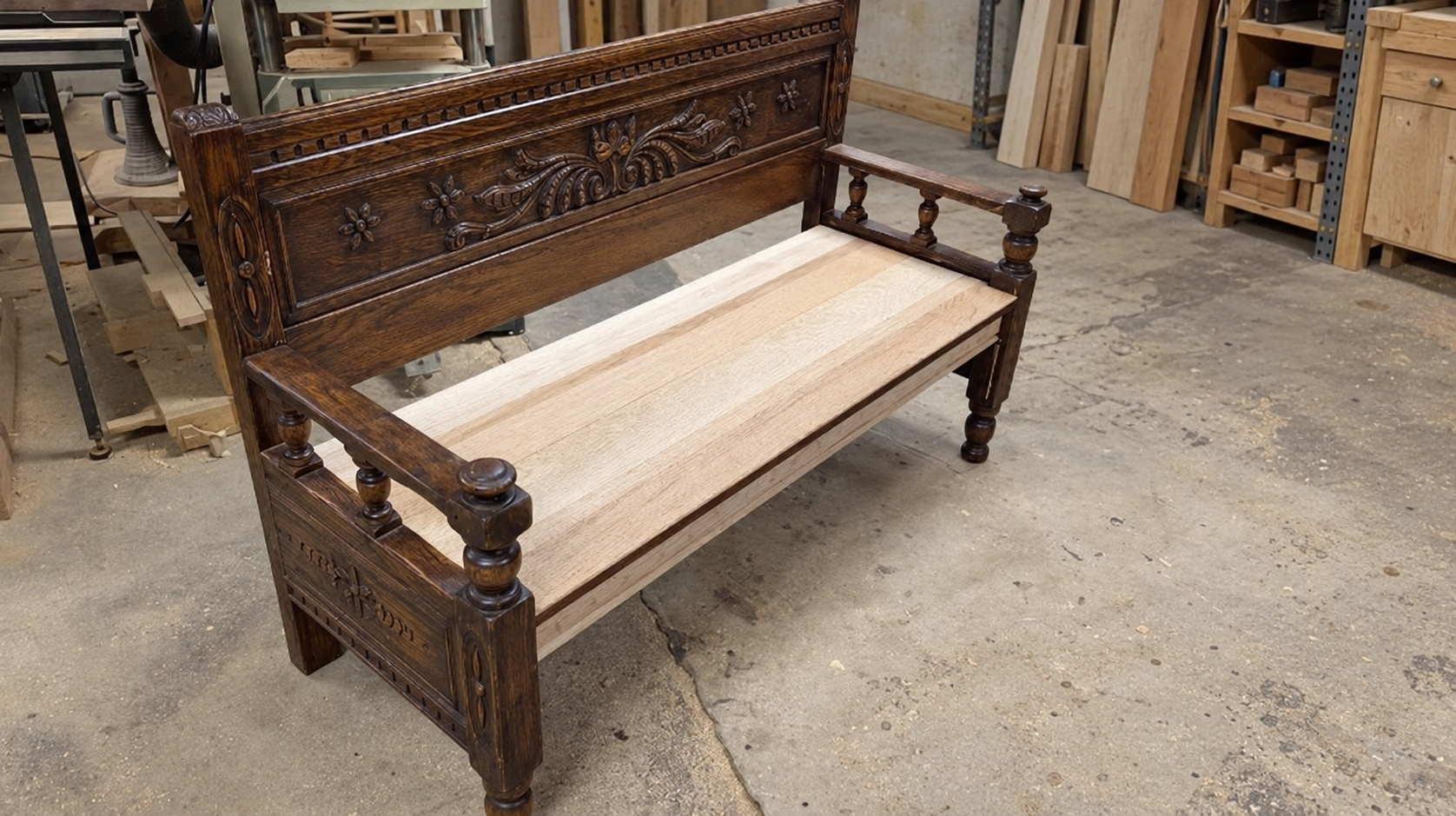
The antique bed components and newly constructed seat assembled before staining and finishing.
Finished Bench
After staining, the original and newly made components read as one complete piece. The bench was protected with a clear satin spar urethane, which highlights the wood grain, carved details, turned posts, and custom-routed apron.
The finished bench preserves the most distinctive parts of the antique bed while giving them an entirely new purpose. Like the old bed, this bench will make a lasting impression on all who use it.
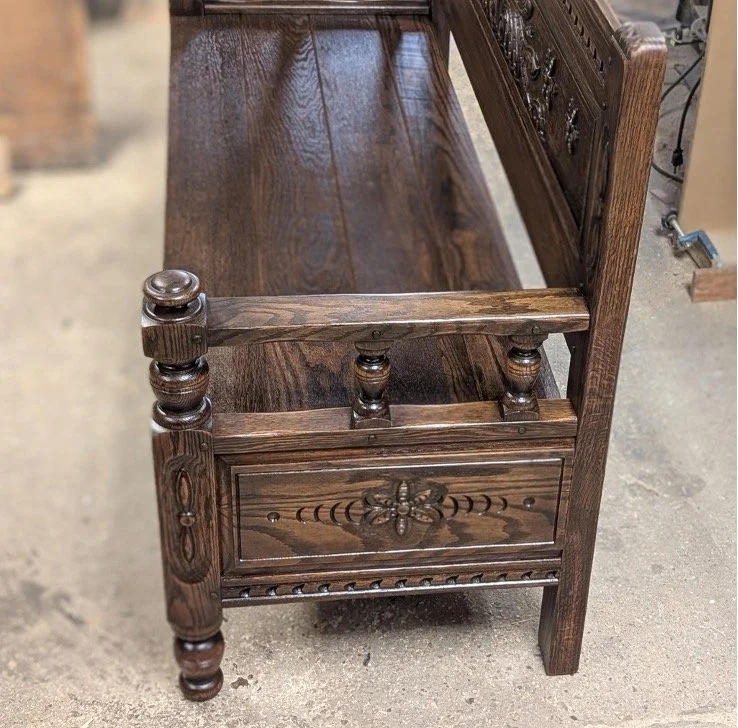
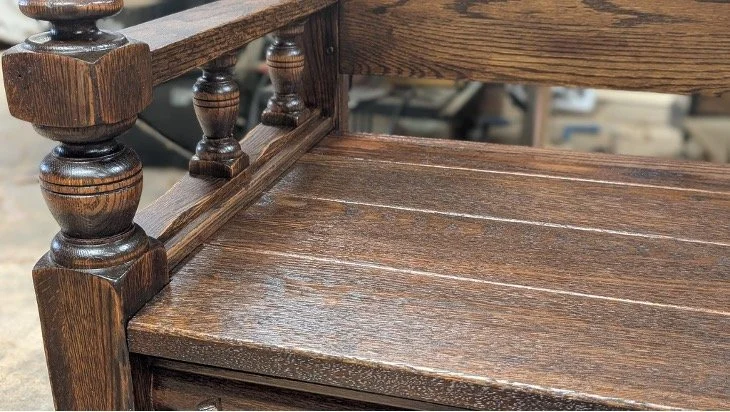
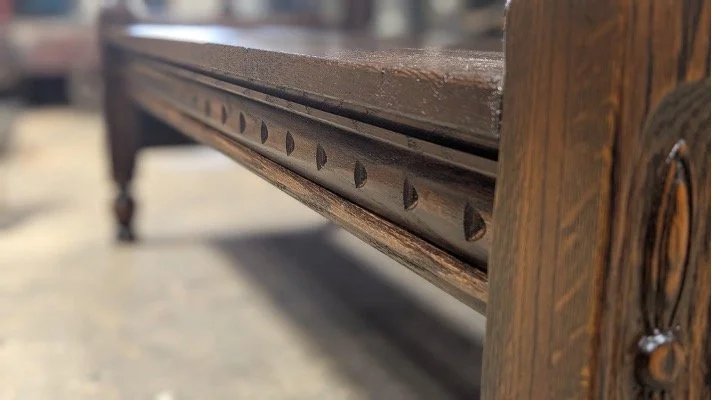
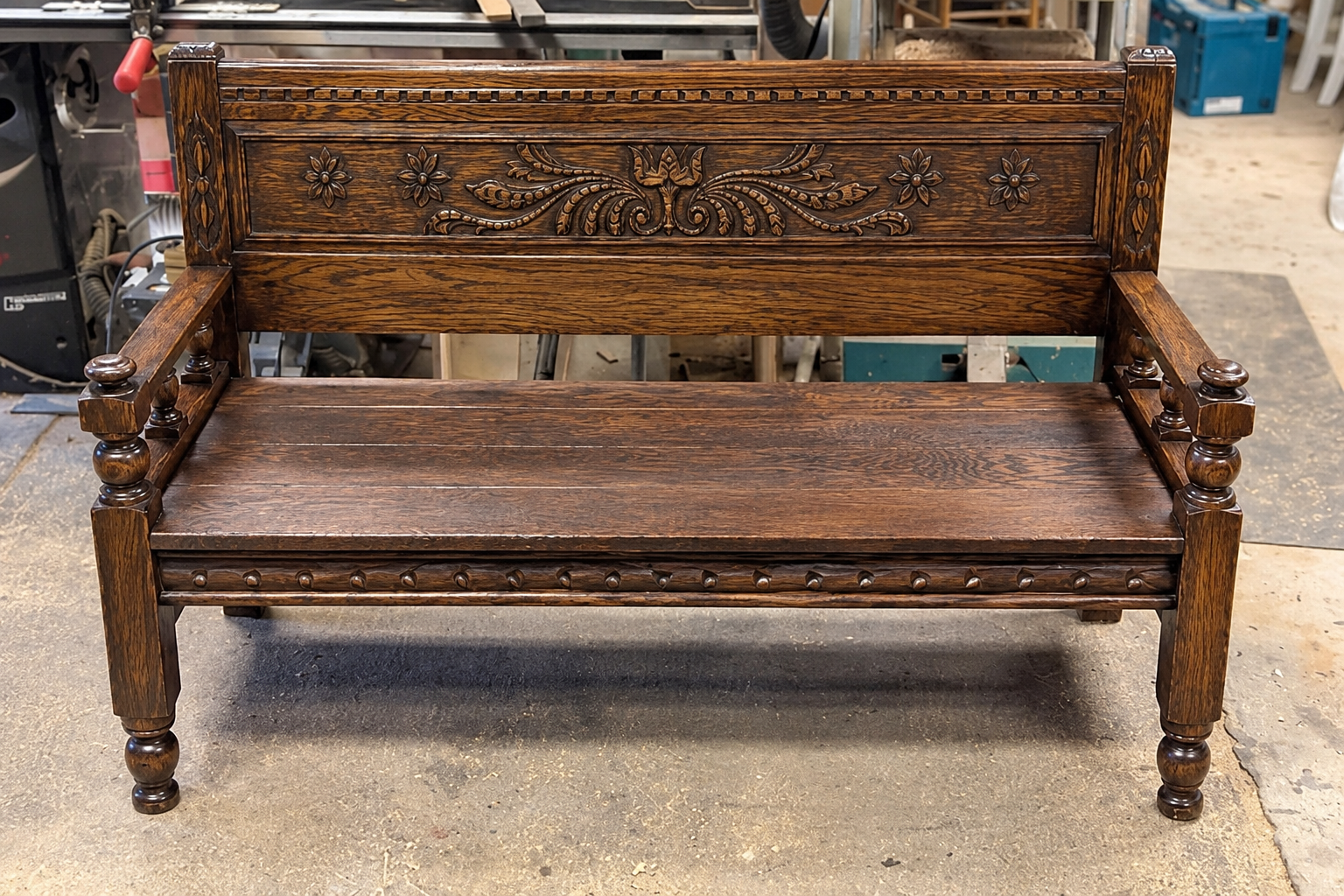
The completed bench brings together the original carved bed components with the custom-built seat and apron.
